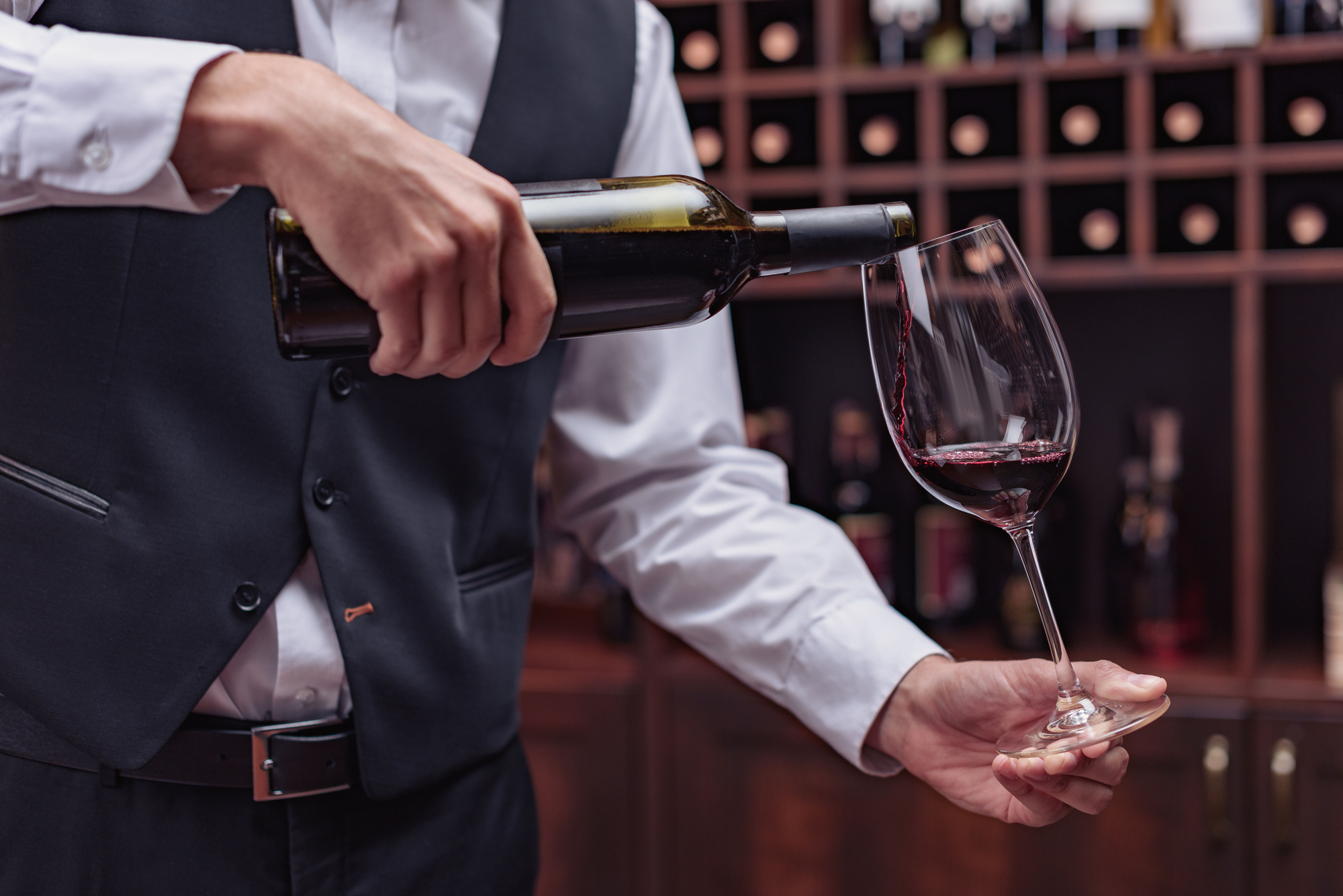

The wholesale wine market is collapsing.
Global producer inventories are at historic highs. Italian cellars are sitting on 53.3 million hectoliters of unsold wine — roughly an entire annual harvest with nowhere to go, the highest stock level ever recorded. By mid-2026, Italian red-wine inventories climbed to 58.5 million hectoliters, up from 40 million a year earlier. Italian DOC bulk wine prices in June 2026 dropped 7% year-over-year. Common wines dropped 19%.
United States wineries are carrying 84 million cases of excess inventory — roughly 30% more wine than the market can absorb at profitable prices. Some producers held so much unsold stock from prior vintages they made almost no wine in 2025. Silicon Valley Bank’s 2026 report found that 15% of surveyed wineries reported “extremely excessive” inventory levels, with nearly 45% reporting supply in excess of what they need. Some wineries are now carrying two to five years of inventory on average.
Australia is sitting on 2.06 billion liters of unsold wine — a stock-to-sales ratio of 1.9, nearly two years of supply. Riverland Shiraz grapes are indicated at $80-$120 per tonne against production costs above $350 per tonne. Producers are selling grapes below the cost of growing them. Grapes are being left on the vine unharvested. Vineyards are being pulled out.
Supply has exceeded consumption every single year since 2018, averaging over 10% oversupply annually.
The wholesale market is drowning.
The restaurant wine list is not drowning. The restaurant wine list is priced as if wholesale is expensive, scarce, and elevated. The wine list is priced as if the pandemic never ended.
That gap between what the wholesale market is doing and what the restaurant wine list is doing is the entirety of the operating move I am prosecuting in this piece. The gap has a name. It is [Menu Arbitrage]. The wine case is its sharpest current instance. And every operator running a wine program in 2026 is either executing it deliberately or defending it inertially, and the Guest reads the extraction on the menu line every time they open the list.
The Frame
[Menu Arbitrage] is the operator move of holding menu-surface elements firm against cost-side movement and capturing the resulting spread as margin. The extraction lives in the spread, not in the endpoint. The operator is not adding value to justify the widening margin. They are capturing a market condition — wholesale price decline, cost input softening, supply glut — and defending the capture as normal operating margin.
[Menu Arbitrage] runs in several variants across the operator’s menu. Price hold is one — the printed price stays flat while wholesale cost falls, and the spread expands as pure extraction. Portion shrinkage is another — the printed price stays flat while the portion contracts, capturing spread through quantity reduction the Guest may not immediately see. Pour reduction is another — cocktail pours contract from the industry standard while the drink price holds. Composition downgrade is another — cheaper components substituted into the same-named preparation while the menu language stays constant. Fee addition is another — extraction moved off the menu-line-item price to a service charge, cover charge, or convenience fee that captures margin outside the Guest’s price-comparison surface.
Every one of these is the same operator move at the same menu surface running the same mechanism. Hold something the Guest reads as fixed. Move something the Guest cannot easily verify. Capture the spread.
The wine list is where [Menu Arbitrage] runs most visibly right now because the wholesale collapse is so severe that the spread is impossible to miss for anyone who looks. But every operator reading this piece is running [Menu Arbitrage] elsewhere on their menu, and the wine case is only the sharpest instance because the cost-side data is so publicly available. The rest of the menu runs the same mechanism at lower visibility.
What The Industry Has Said About Restaurant Wine Pricing In 2026
I have been reading the trade press on restaurant wine pricing this year. What I have found across the trade publications, the sommelier commentary, the wine-focused Substacks, and the industry conferences is a consistent set of positions that must be dismantled. I will not name the sources. The point is the pattern, not the byline.
The pattern runs like this.
The trade commentary defends elevated restaurant wine markups by naming the operator’s cost pressures. Labor is expensive. Occupancy is expensive. Insurance is expensive. Utilities are expensive. The wine program requires trained cast, inventory carry, storage, breakage, opening the bottle, presenting the bottle, decanting when required, holding the glass to spec, replacing damaged glassware, and covering the risk of the bottle sitting in inventory. All of that operational infrastructure costs money. The elevated markup covers it.
The commentary continues. Wine is a low-turn category compared to food. Bottles sit longer. Working capital is tied up. Cellars require conditioning. Older wines require storage that spans years. The margin has to be high enough to justify the capital tie-up and the carrying cost.
The commentary continues. Guests understand the value of the wine list. Guests come to restaurants for an experience that includes curated wine selection. The sommelier’s work, the buyer’s work, the cast’s work in presentation — all of it is embedded in the markup. The Guest paying $80 for a bottle that retails at $30 is not paying for the wine. They are paying for the whole restaurant experience wrapped around the wine.
The commentary continues. Younger Guests are drinking less wine. Wine club subscriptions are stagnant. The wine industry is fighting a demand decline. The restaurant is the last profitable channel for wine. If restaurants lower wine markups, wine will die in restaurants. Wine already died at retail. The restaurant is where wine can still command a premium and needs to command a premium to survive.
The commentary continues. By-the-glass programs justify their own higher effective markup because open bottles have shelf life. Preservation systems are expensive. Waste is real. The by-the-glass math is different from the bottle math because the operator is carrying oxidation risk. A $16 glass from a $40 bottle is not a 4x markup on the wine — it is a 4x markup on the wine plus preservation cost plus waste cost plus the risk that the bottle does not sell through before spoilage.
Every single one of these arguments has a specific reason it fails at the mechanism level, and every single one of them stacks with the others in a way that produces the arbitrage they collectively defend.
The First Argument
The individual dismantling. The elevated markup covers operational infrastructure that has always existed.
The cast, the cellar, the storage, the breakage, the training, the buyer’s time, the sommelier’s expertise — none of this appeared in 2022. Restaurants have been carrying wine programs with all of this infrastructure since restaurants have had wine programs. The infrastructure argument would justify the same markup it justified in 2019, when a mid-range bottle cost $25 wholesale and priced at $60 on the list. That same markup applied to today’s wholesale cost — which is lower than 2019 for many categories after the supply glut — would produce a lower retail price than the list currently carries, not the higher price the list actually carries.
The operational infrastructure argument would defend stable markup multipliers. It cannot defend expanded markup multipliers running against declining wholesale cost. The math falls apart the moment the reader lays 2019 markup logic against 2026 wholesale numbers.
The cumulative impact. When this argument stacks with the other arguments — labor is up, occupancy is up, insurance is up — it produces a compounding defense of expanded margin that no individual cost input can justify. The Guest is being asked to underwrite the entire cost-inflation environment of the restaurant industry through the wine list specifically, because the wine list is the highest-margin category on the check. The Guest’s wine order is subsidizing the labor, the occupancy, the insurance, and the utilities of the whole operation. That is not how [Product Composition] works. Each menu category should carry its own economics. When the wine list is being asked to carry the food side’s cost pressures, the Guest reads it as extraction because it is extraction. The bottle they are buying is not paying for the wine — it is paying for the restaurant’s decision to hold food prices steady by inflating wine margins.
The move that would work. The operator running my framework recalibrates markup multipliers against current wholesale cost, not against 2020-era wholesale cost. When wholesale drops 20%, markup multipliers hold — which means retail drops proportionally. When wholesale rises 20%, markup multipliers hold — retail rises proportionally. The multiplier is the operator’s markup discipline. The retail price is the pass-through outcome. That is [Pass-Through Pricing]. The Guest reads it as coherent because it is coherent. The operator’s margin per bottle stays proportionally consistent. The operation’s beverage program stays healthy because the Guest keeps ordering wine.
The Second Argument
The individual dismantling. Wine is a low-turn category and requires elevated markup to justify capital tie-up.
Wine has always been a low-turn category. The capital tie-up argument was true in 1995 when restaurant wine markups ran at 2.5x-3x wholesale. The capital tie-up argument was true in 2015 when markups still ran at 2.5x-3x. The capital tie-up argument is now being offered to justify markups of 4x-6x. The capital tie-up did not change. The markup did.
If capital tie-up justifies today’s markup multiplier, then capital tie-up justified a lower multiplier for the prior three decades of restaurant operating history, and the industry was systematically undercharging for wine for thirty years. Nobody in the trade press wants to make that argument, because it is absurd. The industry was not undercharging for wine for thirty years. The industry is overcharging for wine now.
The cumulative impact. The capital tie-up argument stacked with the operational infrastructure argument produces a defense structure where every category of operating cost gets loaded into wine markup independently, and none of the individual cost inputs are ever isolated against historical baselines. The operator is defending the aggregate margin without accounting for what each individual cost input actually contributes to the total. The Guest is paying for a phantom cost stack that does not correspond to any actual set of expenses the operation is carrying.
The move that would work. The operator running my framework holds markup multipliers to the multiplier the operation’s economics can honestly defend, tests the multiplier against wholesale movement in both directions, and passes cost changes through to the Guest as retail price adjustments. Capital tie-up is real. It gets covered by the multiplier the operation has always used to cover it. When wholesale cost drops, the multiplier stays and retail drops. The capital tie-up is unchanged because the wine is unchanged. What changes is the price on the menu.
The Third Argument
The individual dismantling. The Guest is paying for the whole restaurant experience wrapped around the wine, not just the wine.
Restaurants have been charging for the whole experience for as long as restaurants have existed. The whole-experience argument is not new information. It has been in the markup for a century. What the argument cannot explain is why the whole-experience premium expanded 40% between 2019 and 2026 while the underlying restaurant experience did not change. The same restaurant serving the same food with the same cast in the same room is now charging materially more for the wine that accompanies the same experience. If the whole-experience justification held constant, so would the markup. The markup did not hold constant. The markup expanded.
The whole-experience argument is doing invisible work here. It is being used to justify any level of markup at any time, because “the whole experience” is undefined and therefore infinitely elastic. Whatever markup the operator wants to charge, the operator can defend as reflecting “the whole experience.” That is not a pricing discipline. That is a rhetorical device that allows the operator to escape accountability for the specific pricing decision.
The cumulative impact. When the whole-experience argument stacks with the operational infrastructure argument and the capital tie-up argument, the operator has constructed a pricing defense that cannot be tested against any specific input. Every dollar of expanded markup can be attributed to some undefined portion of the whole experience. The Guest is paying more for the same experience because the operator has defined the experience as whatever justifies the current price. This is [Case Study Reduction] running on the operator’s own pricing history — the operator retrospectively defends the current price as the correct output of the operation’s whole-experience value, without asking why the current price is different from the historical price for the same operation.
The move that would work. The operator running my framework prices the wine list against wholesale cost with a defended markup multiplier and prices the whole-experience premium into other menu categories or into a defensible cover charge or into the food side’s markup — not into an elastic wine markup that expands whenever margin pressure appears elsewhere. The wine list is not a slush fund for the whole-experience economics. The wine list has its own economics. The whole-experience justification is a separate line item that gets priced separately or gets embedded into food margin where the Guest is more likely to read it as fair.
The Fourth Argument
The individual dismantling. Wine is dying at retail, and the restaurant is the last profitable channel that needs to command a premium to survive.
This argument is the sharpest inversion in the trade commentary because it names a real market condition and then draws exactly the wrong conclusion from it. Wine is under demand pressure. Wine retail is soft. The restaurant is a critical channel for wine consumption. All of that is true. What is false is the conclusion that follows: therefore restaurants must charge more for wine.
If wine is under demand pressure, the correct operator response is to make wine more accessible to the Guest, not less accessible. If younger Guests are drinking less wine, the correct operator response is to price wine at a level that allows younger Guests to build the habit of ordering wine, not to price wine at a level that trains them to skip it. The restaurant is the last profitable channel for wine because the restaurant is where the Guest encounters wine in a hospitality context. That encounter is where the Guest’s lifetime wine relationship gets built or destroyed. Pricing the encounter at extraction levels destroys the relationship at exactly the moment when the operator is trying to build it.
The commentary is defending short-term per-transaction margin against long-term category health. The wine on the list gets marked up to defend today’s beverage revenue. The Guest who cannot afford the wine on the list stops ordering wine. The Guest who stops ordering wine at restaurants stops ordering wine at home. The category collapses further. The next round of trade commentary defends the next round of expanded markup by pointing to the deepening demand collapse. The mechanism eats its own future.
The cumulative impact. When this argument stacks with the others, the operator has constructed a fully closed defensive posture. Every cost input justifies higher markup. Every operational input justifies higher markup. Every demand-side pressure justifies higher markup. Every category-level challenge justifies higher markup. The only thing that never justifies lower markup is the actual data — which, right now, is that wholesale wine prices are collapsing and Guest fatigue is at extreme levels. The defensive posture is impermeable to any input that would produce a downward pricing move.
The move that would work. The operator running my framework treats the wine list as an investment in Guest wine consumption, not as an extraction from the Guest’s willingness to pay. Entry-level bottles get priced at levels the Guest will actually buy at frequency. Mid-tier bottles get priced with graduated markup that reflects the reality that Guest sensitivity is highest at the top. Trophy bottles get priced with soft markup that treats the trophy Guest as a compounding relationship, not a single transaction. The whole list is priced as a Guest-development architecture. The operator is building the wine drinker the operation will need in five years, not extracting from the wine drinker the operation happens to have this Tuesday.
The Fifth Argument
The individual dismantling. By-the-glass programs justify their own higher effective markup because of oxidation risk and preservation cost.
This is the most technically precise of the arguments, and the one where the specific dismantling requires the most operator knowledge. The by-the-glass math historically ran on a specific principle: the first glass poured from the bottle covers the bottle’s wholesale cost, and every subsequent glass is margin. A 750ml bottle yields five 5oz pours. If the wholesale cost is recovered in the first pour, four pours per bottle are margin against zero cost of goods. That is a very high effective margin on the by-the-glass program because the bottle’s cost basis is exhausted after one pour.
That math is why by-the-glass has always been an accommodation category more than a margin category. The Guest who wants one glass, the Guest exploring, the Guest not committing to a bottle, the Guest at a solo meal, the Guest as the second wine drinker at a table of four — all of these Guests get served by by-the-glass at a program that historically absorbed operational risk because the underlying bottle math was so favorable to the operator. Preservation cost, oxidation risk, and pour-through-rate risk all existed and were all absorbed by the very high effective margin on pours two through five.
What has happened in the past several years is that by-the-glass programs have severed from bottle math entirely. Programs are now built on standalone pour-cost targets that treat each pour as an independent economic unit disconnected from the bottle it comes out of. A 25% pour-cost target on a $6 wholesale glass yields a $24 retail price regardless of what the bottle costs or what the bottle sells for. The by-the-glass program has become a separate profit center with its own economics, its own markup logic, and its own defense structure. The bottle is no longer the anchor. The pour is.
That severance is where the arbitrage crystallizes. The Guest paying $16 for a glass out of a bottle that is on the same list at $60 is paying more per ounce than the Guest buying the bottle. Historically that spread was a small accommodation premium and the by-the-glass Guest got served at reasonable cost. Currently that spread is aggressive extraction dressed as pour-cost discipline. The by-the-glass Guest is paying a substantial premium for the operator’s decision to treat by-the-glass as a margin center rather than an accommodation function.
The cumulative impact. When this argument stacks with the others, the operator has constructed a two-tier extraction system. Bottle margin runs one arbitrage against wholesale collapse. By-the-glass margin runs a second arbitrage on top of the bottle margin — the pour is priced against a standalone target that ignores the bottle economics entirely. The operator captures spread at both tiers. The Guest reading either tier sees extraction. The Guest reading both tiers together sees a wine program that has become primarily a margin instrument rather than a hospitality architecture. That is [Ranking-Composition Coherence] failure at the beverage program level.
The move that would work. The operator running my framework returns to one architecture. The bottle math drives the whole program. By-the-glass pricing is derived from bottle math plus a real handling premium — not from a standalone pour-cost target. The handling premium covers preservation, oxidation, and pour-through-rate risk honestly, but it does not become the primary pricing lever. The by-the-glass Guest pays a reasonable accommodation premium for the flexibility of ordering by the glass. The operator captures the historical by-the-glass economics — high effective margin on pours two through five because pour one covered the bottle cost — which is already very favorable to the operator without additional standalone extraction. The Guest reads by-the-glass as accessible, orders it more, and the bottle program benefits from the on-ramp function that by-the-glass has historically served.
Who Actually Drinks Entry-Level Wines
Before I move to the deeper argument, I need to close one common misread that the trade commentary embeds implicitly and that operator readers often accept without examination. The commentary treats the entry-level wine tier as if it corresponds to an entry-level Guest tier — low-value Guests, low-frequency Guests, price-sensitive Guests who are not worth optimizing for. The commentary implies that aggressive markup on entry-level bottles extracts from the least valuable Guests in the operation and therefore protects the higher-value Guests from having to underwrite the wine list.
That is not who drinks entry-level wines.
There are seven Guest cohorts that order the entry-level tier consistently, and every one of them is a Guest the operation should be optimizing for, not extracting from.
The first cohort is the developing Guest — the wine drinker in the early stages of their lifetime relationship with wine. This Guest is learning what they like, building their palate, exploring producers and regions. They will eventually trade up. They are the future mid-tier and trophy-tier Guest of the operation. Extracting from them at the entry level trains them to buy their wine elsewhere or to skip wine entirely.
The second cohort is the price-conscious regular — the Guest who dines at the operation frequently and orders the entry-level bottle because it fits their frequency budget. This is a high-LTV Guest because of frequency, not because of per-visit spend. Extracting from them at the entry level reduces their frequency or drives them to competitor operations at the same price band.
The third cohort is the second-drinker Guest — the Guest at a table who is not the primary wine orderer, but who wants a glass or bottle at their end of the table. This Guest is often the one making the reservation, driving repeat visits, or bringing the party. Extracting from them reduces the whole table’s wine consumption and the whole table’s read of the operation.
The fourth cohort is the non-primary orderer — someone else at the table chose the wine, and this Guest is the person accommodating. They are often the higher-influence Guest at the table who is deferring to the wine expertise of a companion. Extracting from the entry-level tier means the accommodation Guest experiences the operation as unreasonably expensive on a category they did not even want to order.
The fifth cohort is the price-band-stretched Guest — the occasional-visit Guest for whom this operation is aspirational within their price range. They save the visit for special occasions and order the entry-level tier because that is what fits their budget for the visit. Extracting from them at the entry level makes their aspirational operation into a rejection experience. They may never return.
The sixth cohort is the volume Guest — the Guest ordering multiple glasses or a second bottle over a long meal. Their per-glass spend is at the entry level because their total spend is spread across quantity. Extracting from them at the per-glass level reduces the number of glasses they order and shrinks the operation’s total beverage revenue from a Guest who was going to spend more if the per-unit price was lower.
The seventh cohort is the cocktail-switcher — the Guest who has been drinking cocktails all evening and switches to a glass of wine with dinner. This is often the highest-spend Guest at the table in beverage terms, and their switch to wine is a signal of engagement with the wine program. Extracting from them at the entry-level glass tier trains them to stop switching. They stay in cocktails, which have their own margin economics.
Every one of these Guest cohorts is a high-value or high-strategic Guest to the operation. Entry-level wine tier is not entry-level Guest tier. The commentary that defends aggressive entry-level markup as extraction from low-value Guests is defending extraction from the operation’s most important beverage Guests. The bill for the extraction shows up as reduced frequency, reduced glass count, reduced trade-up over time, and reduced Guest lifetime value across every one of these cohorts.
The Deeper Argument
The five arguments the trade commentary offers are individually flawed. Stacked together, they produce something more consequential than individual flaws.
Stacked together, the arguments construct a fully closed defensive posture that allows the operator to run [Menu Arbitrage] on the wine list indefinitely without ever encountering the actual mechanism they are inside. Every input the operator might read as a signal to lower pricing gets routed through one of the defensive arguments and reinterpreted as a justification for holding or raising pricing. Wholesale price drops? Preservation cost. Younger Guests drinking less? Category-survival premium. Wine sitting in inventory longer? Capital tie-up. Cast requiring higher wages? Whole-experience justification. Guest frequency dropping? Whole-experience premium. Guest fatigue at extreme levels? Guest does not understand the value proposition.
Every possible input signal routes to a defense of the current pricing decision. The system is impermeable to reversal. The operator inside the system cannot see the arbitrage because the system does not admit information that would name it.
This is [Categorical Read Collapse] running from the operator’s side. The operator has lost the ability to read their own pricing environment because their reading apparatus has been built specifically to defend the current pricing. The Guest sees the arbitrage because the Guest has no defensive apparatus. The Guest just sees the menu price against the value delivered and refuses. The operator hears the refusal as Guest ignorance rather than as accurate Guest reading, because the operator’s system does not admit the possibility that the Guest is reading correctly.
Underneath the closed defensive posture is a specific historical dynamic that operators do not usually name but that shapes every pricing decision in the current environment. The dynamic is post-COVID emotional inertia. During 2020-2022, restaurant operators experienced an existential threat. Guest volume collapsed. Operations closed. Cast was laid off. Cash reserves depleted. Emergency pricing decisions were made to survive the immediate crisis — hold prices firm, add fees, capture margin where possible. Those decisions were legitimate during the emergency period. They were survival decisions.
The emergency ended in 2022-2023. Guest volume returned. Operations reopened. The industry stabilized. What did not happen was the corresponding pricing recalibration. The emergency pricing decisions hardened into standard operating pricing. The fees stayed. The elevated markups stayed. The margin expansion stayed. The operator’s emotional state remained in emergency-response mode long after the emergency ended, and the pricing architecture that emerged from that emotional state persisted long after the operational conditions that justified it dissolved.
The operator is now running 2020 fear-based pricing against 2026 Guests who are not afraid. The Guest’s fear ended. The Guest’s price-fatigue replaced it. The operator’s fear did not end because the operator’s fear became institutionalized in the pricing infrastructure that the emergency pricing created. Every quarter that the emergency pricing continued to produce margin, the fear became more justified retrospectively. The operator now defends the emergency pricing as normal operating discipline because the operator’s whole operating discipline has been built around the emergency pricing.
That is the depth of the arbitrage. It is not just an economic move. It is an emotional-state move where the operator’s obsolete emotional response to a past crisis has been converted into a pricing architecture that extracts from Guests whose emotional response has moved on to a different phase entirely.
The Diagnostic
An operator reading this piece can run diagnostics against their own operation. These tests apply to the wine program but generalize across the menu. If the operation runs [Menu Arbitrage] on wine, it runs it elsewhere on menu — the wine case is only the sharpest current instance because the wholesale data is public.
Test One — The Wholesale Trace. Take the current wine list. Trace the wholesale cost movement of five bottles across the past three years. Use current supplier invoices against 2022 invoices. Calculate the change. Then compare it to the menu price change for the same bottles across the same period. If wholesale is flat or declining and menu price is flat or rising, [Menu Arbitrage] is running.
Test Two — The Multiplier Test. Pick the entry-level bottle tier. Calculate the current markup multiplier — retail price divided by wholesale cost. Compare it to the multiplier the operation used in 2019 for the same tier. If the multiplier expanded, [Menu Arbitrage] is running at the entry-level tier. Repeat for the mid-tier and trophy tier. The pattern is usually most extreme at entry-level because the extraction is easiest to defend as “the low-margin tier that needs help.”
Test Three — The Glass-Bottle Ratio. Take the by-the-glass price of a wine that is also available by the bottle. Multiply the glass price by five (assuming 5oz pours from a 750ml bottle). Compare that number to the bottle price. If the multiplied glass price exceeds the bottle price by more than the historical accommodation premium — roughly 20-30% — the by-the-glass program has severed from bottle math and is running independent-margin arbitrage.
Test Four — The Guest Frequency Read. Pull beverage program revenue per Guest visit across the past three years. If per-visit beverage revenue is flat while per-transaction beverage margin is up, the operation is extracting more per transaction from fewer transactions. Total beverage program contribution is being maintained through higher-per-Guest extraction rather than through Guest volume. That is a compression pattern and it collapses on itself.
Test Five — The Cast Read. Ask the cast — servers, sommeliers, wine directors — what percentage of Guest interactions at the wine list include price commentary from the Guest. Compare to two years ago. If price commentary at the list has increased materially, the cast is receiving the Guest’s read of [Menu Arbitrage] in real time. The cast is the operation’s leading indicator on Guest fatigue.
Test Six — The BYOB Signal. Track corkage requests, BYOB inquiries, and Guest wine-brought-from-home patterns. Increases in Guests bringing their own wine indicate the wine program has priced itself out of the Guest’s willingness to buy from the list. BYOB is the Guest running their own [Pass-Through Pricing] arbitrage against the operator’s [Menu Arbitrage] refusal.
Test Seven — The Category Substitution Read. Track whether Guests are substituting away from wine into cocktails, beer, or non-alcoholic beverages at higher rates than three years ago. Category substitution is the Guest voting on the wine program’s pricing without commentary. If wine share of beverage revenue is declining, the Guest is choosing a category with less arbitrage visibility.
Scoring the tests is not necessary. Any one test surfacing [Menu Arbitrage] means the pattern is running. Multiple tests surfacing it means the pattern is running deeply. An operator scoring five or more tests as positive is running a wine program that is actively working against the operation’s long-term Guest architecture.
What You Do Monday Morning
Pick the entry-level bottle tier. Take the three bottles that sell most frequently at entry-level. Pull their current wholesale cost from the most recent supplier invoice. Pull their current menu price. Calculate the multiplier. Compare that multiplier to what the operation used in 2019 for entry-level bottles — pull the old lists if they are archived, or reconstruct from cast memory and old POS data.
If the multiplier expanded, adjust the three entry-level bottles this week. Bring the multiplier back to the 2019 discipline. The retail price on those three bottles drops. Communicate the change to the cast — not as a promotion or a sale, but as a pricing recalibration. The cast will read the recalibration as coherent because it is coherent. They will communicate the recalibration to Guests through the ordering interaction.
Watch what happens to entry-level bottle order rate over the following four weeks. The rate will move. The operation will lose some per-transaction margin on those bottles and gain volume. The volume gain will exceed the margin loss in most cases because the entry-level tier was suppressed by [Menu Arbitrage] pricing that was above the Guest’s willingness to buy. Move the price back into the Guest’s willingness to buy and the Guest starts ordering again.
That is the first move. It is small enough to run this week. It is testable enough that the results appear within one operating cycle. It teaches the operator’s reading apparatus that [Pass-Through Pricing] produces measurable outcomes. The reading apparatus starts admitting information that the defensive posture previously excluded.
From that first move, the operator can extend into the mid-tier, the trophy tier, the by-the-glass program, and eventually across the whole menu. But the first move is one week of work on three entry-level bottles.
To understand the ideal state, go to Restaurant Physics.
Digging Deeper
Positions on the record.
-
The Cost Lens: Why Operators Miss What Guests See — https://jeffreysummers.com/the-cost-lens
-
Ranking-Composition Coherence in Restaurant Product Design — https://jeffreysummers.com/ranking-composition-coherence
-
The Restaurant Contract Architecture — https://jeffreysummers.com/restaurant-contract-architecture
-
Case Study Reduction and the Operator’s Retrospective Trap — https://jeffreysummers.com/case-study-reduction
-
Guest Architecture as Compounding Investment — https://jeffreysummers.com/guest-architecture
Term definitions from the Knowledge Base.
-
[Menu Arbitrage] — https://kb.jeffreysummers.com/menu-arbitrage
-
[Pass-Through Pricing] — https://kb.jeffreysummers.com/pass-through-pricing
-
[Price Fatigue] — https://kb.jeffreysummers.com/price-fatigue
-
[Product Composition] — https://kb.jeffreysummers.com/product-composition
-
[Ranking-Composition Coherence] — https://kb.jeffreysummers.com/ranking-composition-coherence
-
[Guest Architecture] — https://kb.jeffreysummers.com/guest-architecture
-
[Customer Architecture] — https://kb.jeffreysummers.com/customer-architecture
-
[The Cost Lens] — https://kb.jeffreysummers.com/the-cost-lens
-
[Case Study Reduction] — https://kb.jeffreysummers.com/case-study-reduction
-
[Categorical Read Collapse] — https://kb.jeffreysummers.com/categorical-read-collapse
-
[Beverage Arbitrage] — https://kb.jeffreysummers.com/beverage-arbitrage
Discover more from Hacksterism
Subscribe to get the latest posts sent to your email.
